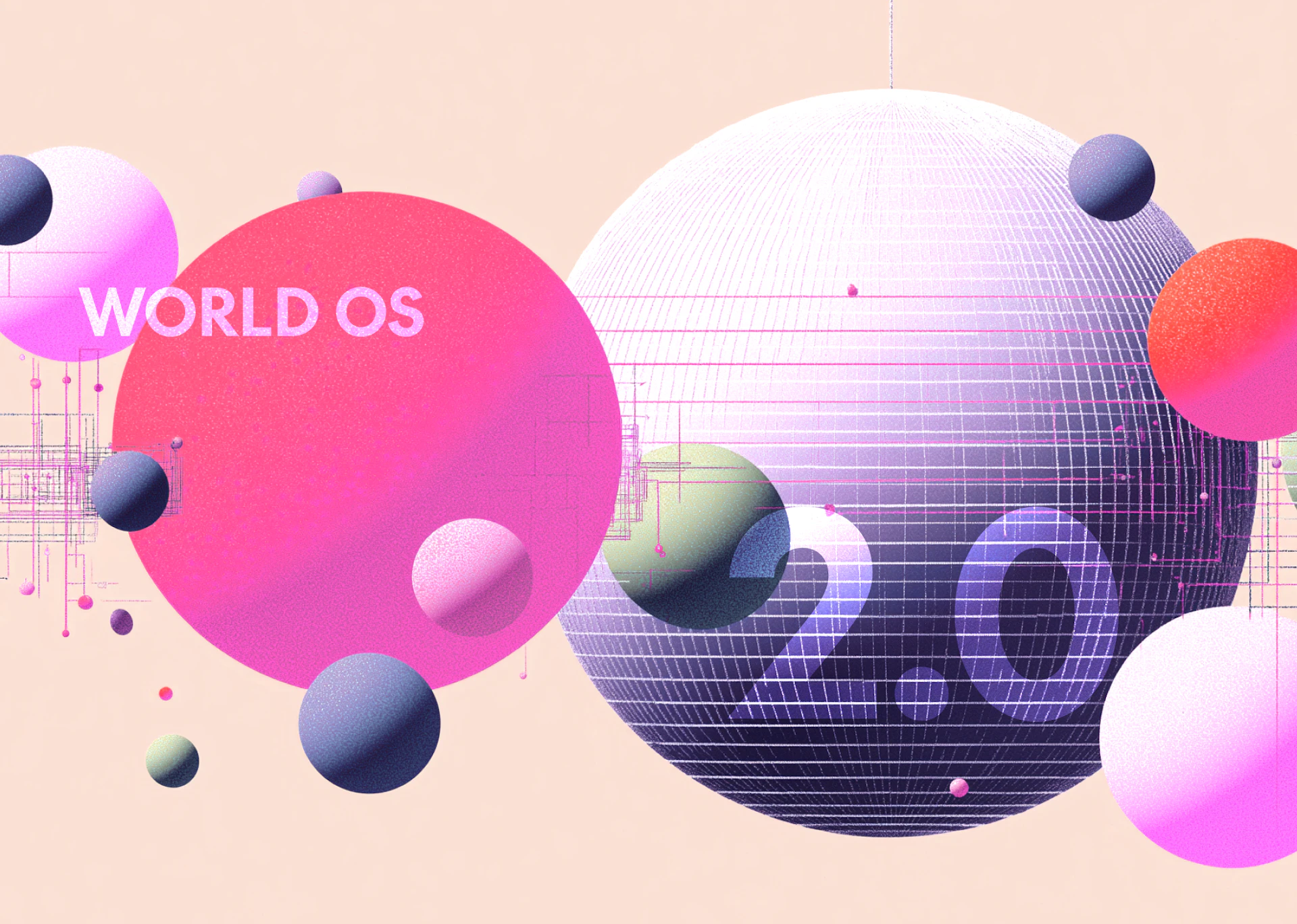
From the fall of the Berlin Wall in 1989 to the Covid outbreak in 2020, globalisation was the world’s default operating system.

Susannah Batley
General Manager of Sharesies Business
For three decades, globalisation linked supply chains across continents, lowered the cost of goods, and helped lift billions into the global middle class. The flow of capital, talent, and technology accelerated. Investors built portfolios on the (implicit or explicit) assumption that borders were getting softer, and companies focused on speed, cost, and scale.
Over the past five years, the world has begun to converge around something else: resilience.
Are we in a new era?
The globalisation era was not driven by ideology but by efficiency. Comparative advantage and just-in-time supply chains ruled. It's generally the default to assume that things will keep going the way they are, and in this case that:
geopolitics would stay within predictable bounds;
energy would remain cheap;
pandemics were the stuff of distant history;
semiconductors, ships, and shipping lanes would always be available when needed.
Boy we were wrong.
From the invasion of Ukraine, to escalating tensions in the Middle East, to the weaponisation of trade and tariffs, to supply chain fragilities exposed by COVID, to increasing climate volatility – friction is back. And in many places, instability is becoming the rule, not the exception.
Resilience is taking centre stage.
Governments and companies are redesigning their strategies around resilience rather than efficiency. This is showing up in several ways:
Rewiring supply chains: “China plus one” strategies, nearshoring, friend-shoring, and diversification across geographies. The goal is no longer necessarily the cheapest supply chain, but the one that is most likely to withstand shock. Redundancy, once considered waste, is now seen as a valuable insurance policy.
Strategic re-industrialisation: Countries that once embraced offshoring are rebuilding domestic industrial capacity. The United States’ CHIPS Act, Europe’s energy independence push, and India’s manufacturing incentives all reflect a return to industrial policy.
Energy security even though it costs: The world’s energy system is shifting from a global optimisation problem to a national security one. Renewables, storage, and nuclear function as resilience assets as well as climate solutions.
Digital and data sovereignty: As digital infrastructure becomes critical infrastructure, nations are asserting control over data, cloud storage, and cybersecurity standards. The logic is the same: if your systems are built on someone else’s platform, your resilience is borrowed, not owned.
A shift to vertical growth: I’ve been reading Peter Thiel’s Zero to One, which offers a helpful lens on the moment we are in. He distinguishes between horizontal progress, which scales what already exists, and vertical progress, which creates something fundamentally new.
For much of the past three decades, the world’s growth engine was overwhelmingly horizontal. Globalisation copied and distributed the same productive model across borders. We built more factories, more supply chains, more connections. Outside of the internet, genuine vertical breakthroughs have been comparatively limited.
Today, those dynamics are flipping.
Horizontal growth is slowing as globalisation meets geopolitical constraints. But vertical growth is accelerating. Advances in AI, energy systems, biotechnology, automation, and advanced manufacturing are creating capabilities that didn’t exist even a decade ago.
In this environment, resilience becomes more than a defensive principle. It becomes the operating system for a world transitioning between two different kinds of progress: from scaling what already exists, to creating what does not yet exist. Resilience helps societies and companies withstand the turbulence of this transition, absorbing shocks while enabling reinvention.
How investors can respond
Investors can adapt by watching three markers:
Balance sheet flexibility: Cash and low leverage provide the capacity to absorb shocks and take opportunities created by the fragility of competitors. What once was considered an efficient balance sheet today might look like a distressed one. What once was considered a lazy balance sheet might today look like a strong one.
Optionality in business models: The ability to pivot markets, alter supply chains, or adopt new technologies quickly is more important.
Exposure to critical inputs: Semiconductors, energy, logistics, cybersecurity, and water infrastructure are all becoming strategic assets. A direct or indirect stake in these indispensable assets and their related markets is a strong sign of potential resilience.
If globalisation was about removing slack, resilience is about intentionally adding it back.
That doesn’t mean retreating into protectionism or abandoning global cooperation. Instead, it’s a recognition that interconnected systems need buffers. Nature has always known that ecosystems thrive not because they are efficient, but because they are adaptable. They carry spare capacity.
The world’s new operating system seems to be converging on that same axiom.
So what does this mean?
We’re living through a transition phase, and transitions are uncomfortable. But they also create space for reinvention. Resilience gives companies, nations, and individuals the capacity to withstand shocks while positioning themselves to capture upside in a world remade by new technologies.
If globalisation was the system that maximised efficiency, resilience may be the one that maximises adaptability. Combined with a shift from horizontal copying to vertical creation, we can begin to make out a different shape of progress: less about extending the old model, more about building the next one.
In uncertain times, the winning edge is unlikely to be perfect optimisation. It’s the ability to adapt, to absorb, and to create anew. That’s the operating system the world seems to be installing now.
Like what you read?
Subscribe to The Advocate, our newsletter for businesses, and get access to the latest trends, insights, and ideas that are redefining the markets.
Now for the legal bit
The content of this article is general only and current at the time prepared—views and data are subject to change. None of the information provided is investment, financial, legal, or tax advice, and we aren’t liable for your use of the information in that way.